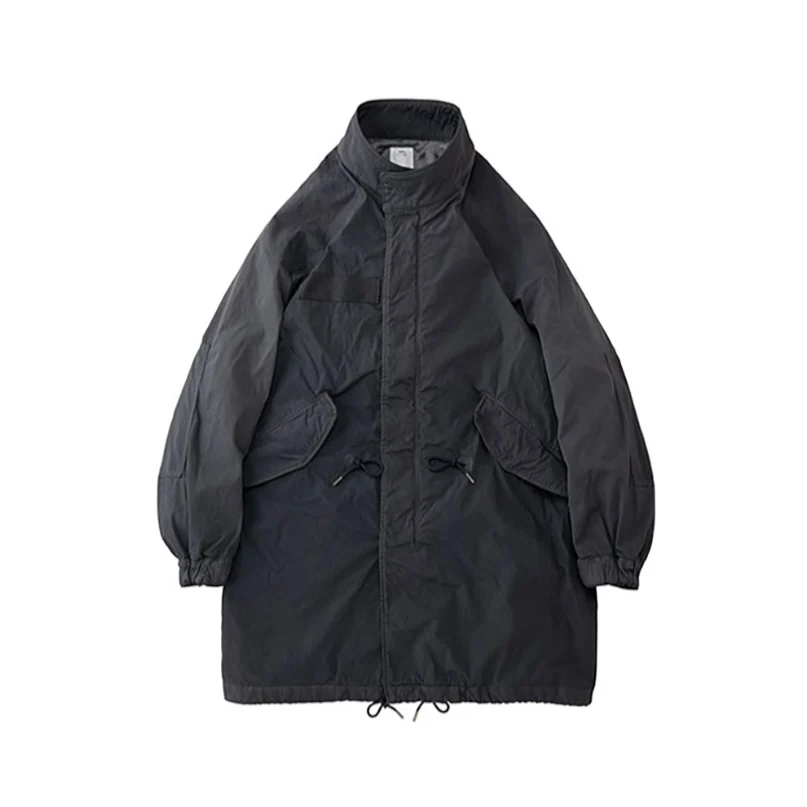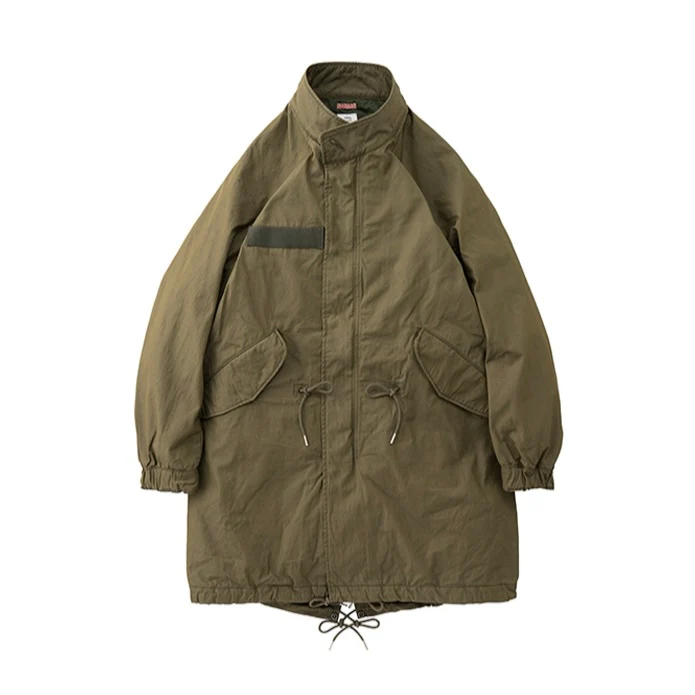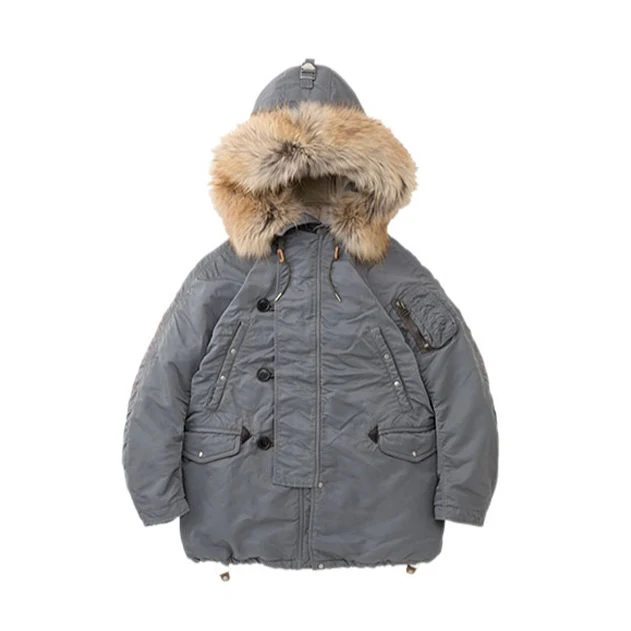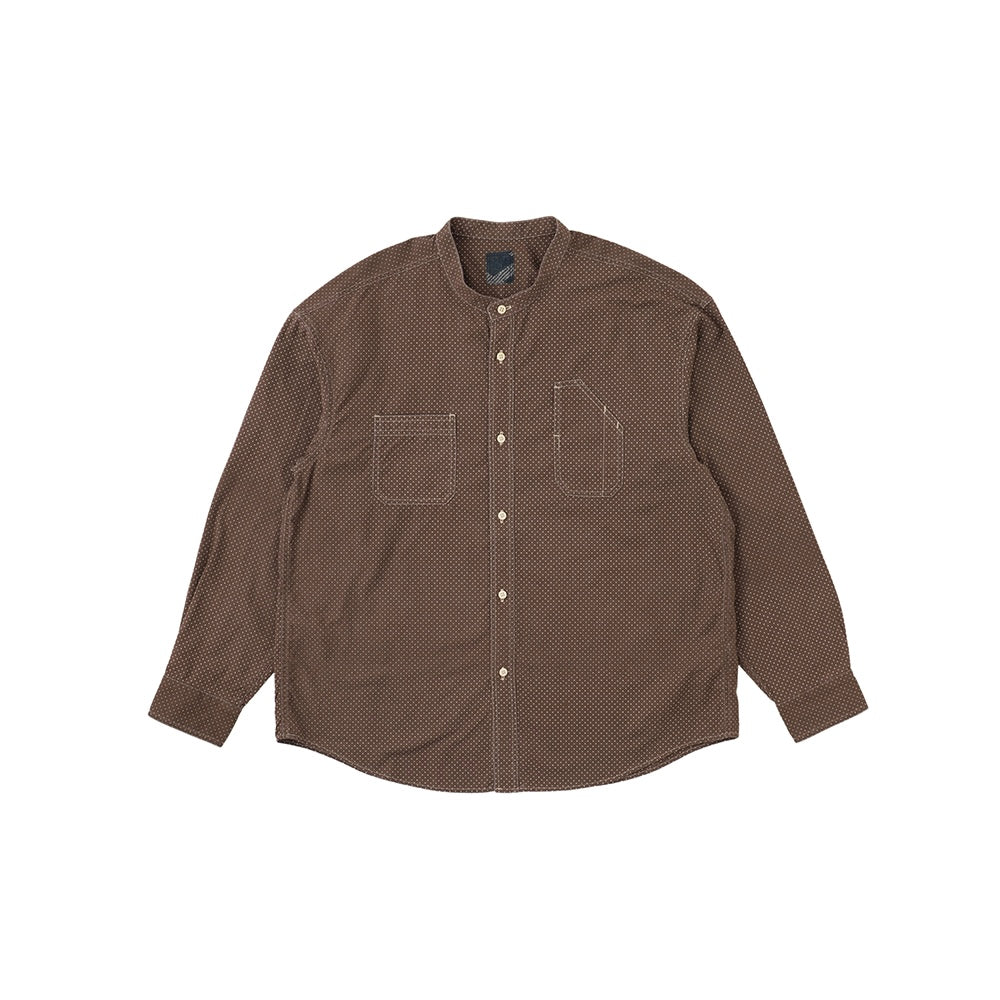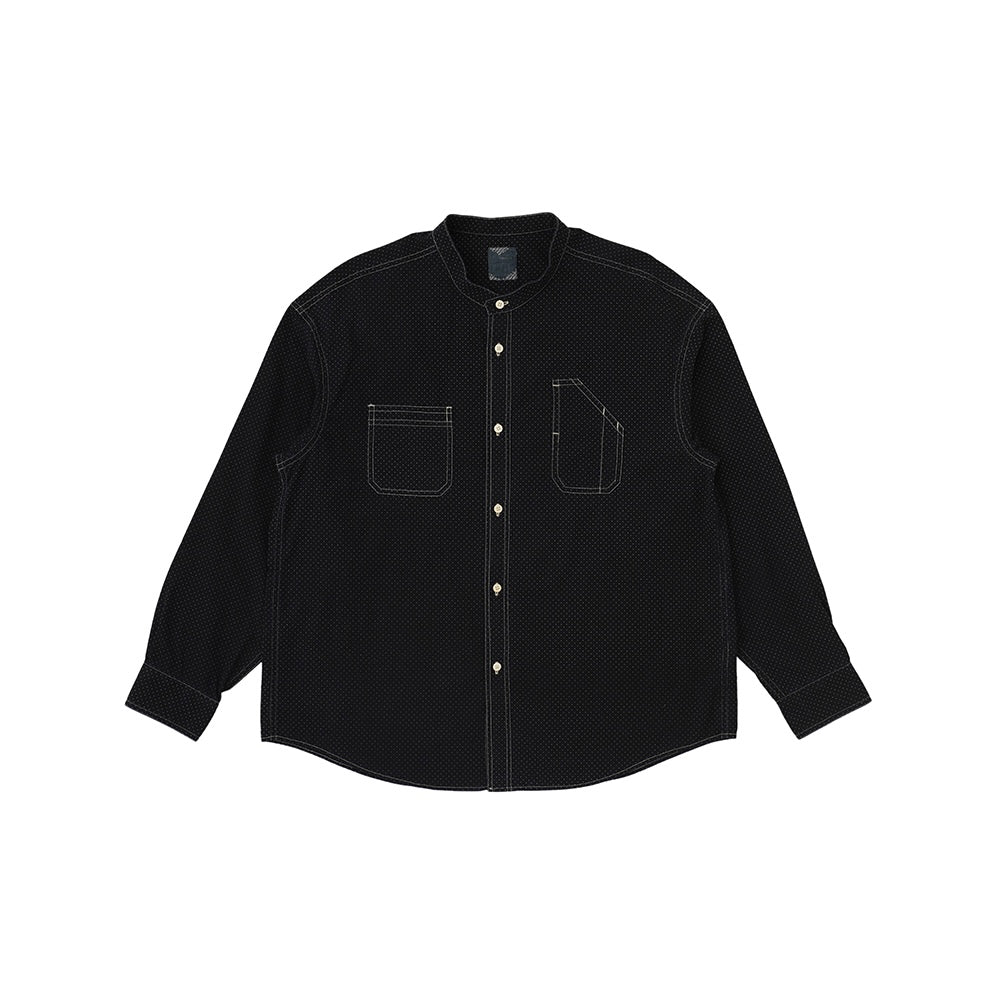


T.T 26SS LOT.411 M-1918 RAIN COAT
During the New Deal era, the CCC (Civilian Conservation Corps) was sometimes supplied with surplus military garments to meet rapidly growing demand. This raincoat is believed to be one such example. Its design traces back to 1918, originating from the military ponchos worn by U.S. cavalry units.
At the time, the most advanced waterproofing technology was rubber coating. Though modern materials like GORE-TEX are now widely used, this coat already featured underarm ventilation to prevent overheating—details that remain common in contemporary rainwear.
Originally developed as rain gear for soldiers during the final stages of World War I, the coat later reappeared during the Great Depression. While plain-woven cotton was typically used in the past, T.T. chose a fabric woven from linen and Japanese washi paper yarn.
In Japan, washi has long been treated with persimmon tannin, oil, or lacquer to enhance waterproofing and durability—traditionally used for rain capes. Reinterpreting this 100-year-old Western garment through the lens of Japanese technique embodies T.T.’s foundational approach. This concept led to the creation of a raincoat dyed with kakishibu (persimmon tannin), using a fabric that includes washi.
As a special piece, these pants are dyed with kakishibu (fermented persimmon tannin), which has traditionally been used to strengthen fabric. In addition, a unique ink-marbling pattern called Suminagashi, resembling the rings of a tree, was individually transferred from the surface of water.
This marbling technique, originating from a pastime of the Heian period, involves dripping ink slowly at the center of a water surface. Each garment is floated on this inked surface and the pattern is transferred. Due to subtle movements in the air and water, no two patterns are ever the same. By entrusting the final touch to nature, the design captures not only the uncontrollable beauty of natural forces, but also the passage of time as each ring forms.
46% LINEN 54% Washi
| Size | Length(cm) | Shoulder(cm) | Chest(cm) | Sleeve(cm) |
|---|---|---|---|---|
| 38 | 102 | 53 | 123 | 59.5 |
| 40 | 104.5 | 55 | 128 | 61 |
| 42 | 107 | 58 | 133 | 62.5 |
T.T products are dyed with natural dyes, so there may be uneven dyeing, but it is a characteristic of the product.
Please note that the color may fall or migrate when exposed to sunlight, friction, or wetting with water for a long period of time.
Please avoid layering with white or light-colored items.
The iron accessories used for tack buttons, rivets, buckles, etc. are faithfully reproduced in the details of old times, and since the materials have not been faithfully processed to prevent rust etc, Therefore, there is a possibility that the accessories may rust or become dangerous (sharp pin tips) when used.
We cannot be held responsible for any accidents or damages caused by the use of this product, so please check the product thoroughly and make sure you understand the product.
About Size and Dimensions
Even for the same item, there may be individual differences of 1 to 2 cm due to the production and processing process.
Tucks and gathers are measured by placing the garment naturally without spreading it out and adjusting the shape of the product.
Original: $6.59
-65%$6.59
$2.31Product Information
Product Information
Shipping & Returns
Shipping & Returns
Description
During the New Deal era, the CCC (Civilian Conservation Corps) was sometimes supplied with surplus military garments to meet rapidly growing demand. This raincoat is believed to be one such example. Its design traces back to 1918, originating from the military ponchos worn by U.S. cavalry units.
At the time, the most advanced waterproofing technology was rubber coating. Though modern materials like GORE-TEX are now widely used, this coat already featured underarm ventilation to prevent overheating—details that remain common in contemporary rainwear.
Originally developed as rain gear for soldiers during the final stages of World War I, the coat later reappeared during the Great Depression. While plain-woven cotton was typically used in the past, T.T. chose a fabric woven from linen and Japanese washi paper yarn.
In Japan, washi has long been treated with persimmon tannin, oil, or lacquer to enhance waterproofing and durability—traditionally used for rain capes. Reinterpreting this 100-year-old Western garment through the lens of Japanese technique embodies T.T.’s foundational approach. This concept led to the creation of a raincoat dyed with kakishibu (persimmon tannin), using a fabric that includes washi.
As a special piece, these pants are dyed with kakishibu (fermented persimmon tannin), which has traditionally been used to strengthen fabric. In addition, a unique ink-marbling pattern called Suminagashi, resembling the rings of a tree, was individually transferred from the surface of water.
This marbling technique, originating from a pastime of the Heian period, involves dripping ink slowly at the center of a water surface. Each garment is floated on this inked surface and the pattern is transferred. Due to subtle movements in the air and water, no two patterns are ever the same. By entrusting the final touch to nature, the design captures not only the uncontrollable beauty of natural forces, but also the passage of time as each ring forms.
46% LINEN 54% Washi
| Size | Length(cm) | Shoulder(cm) | Chest(cm) | Sleeve(cm) |
|---|---|---|---|---|
| 38 | 102 | 53 | 123 | 59.5 |
| 40 | 104.5 | 55 | 128 | 61 |
| 42 | 107 | 58 | 133 | 62.5 |
T.T products are dyed with natural dyes, so there may be uneven dyeing, but it is a characteristic of the product.
Please note that the color may fall or migrate when exposed to sunlight, friction, or wetting with water for a long period of time.
Please avoid layering with white or light-colored items.
The iron accessories used for tack buttons, rivets, buckles, etc. are faithfully reproduced in the details of old times, and since the materials have not been faithfully processed to prevent rust etc, Therefore, there is a possibility that the accessories may rust or become dangerous (sharp pin tips) when used.
We cannot be held responsible for any accidents or damages caused by the use of this product, so please check the product thoroughly and make sure you understand the product.
About Size and Dimensions
Even for the same item, there may be individual differences of 1 to 2 cm due to the production and processing process.
Tucks and gathers are measured by placing the garment naturally without spreading it out and adjusting the shape of the product.